

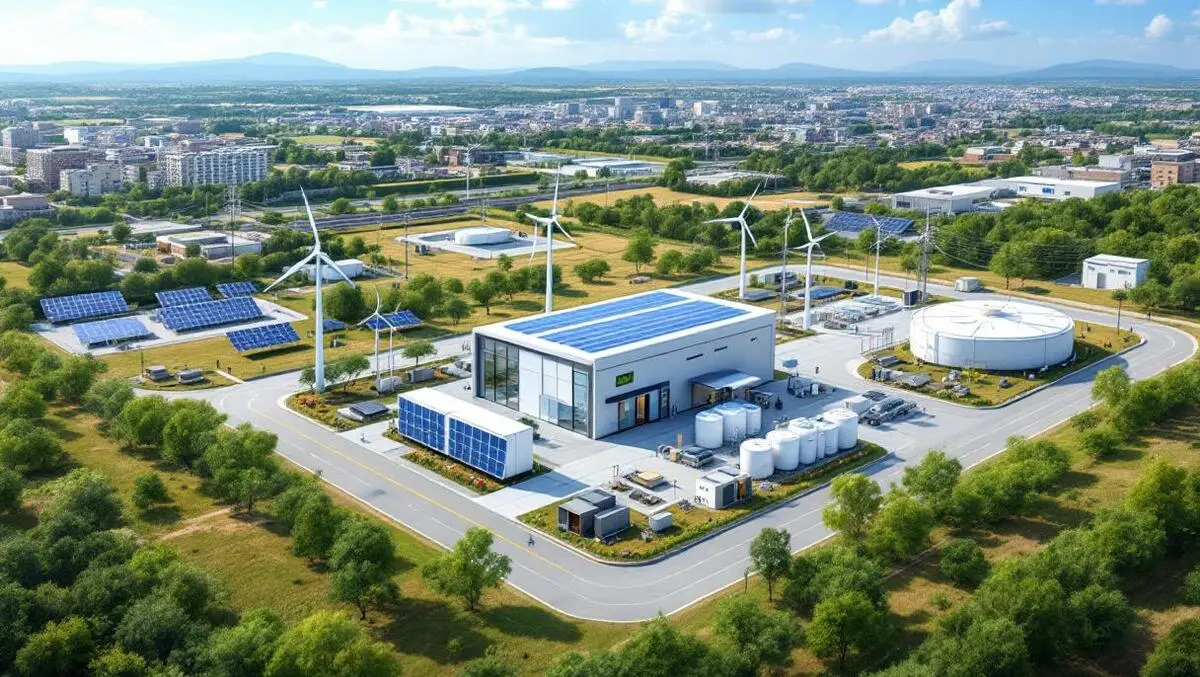
ECL unveils FlexGrid to power AI edge data centres
Thu, 12th Feb 2026
ECL has introduced FlexGrid, a fuel-agnostic power platform for modular data centres targeting AI deployments in locations with limited electricity supply.
The system is positioned as a move beyond hydrogen-only designs and as a response to a shift in AI infrastructure from large, centralised training sites to more distributed inferencing deployments closer to users and data sources.
Multiple fuels
FlexGrid combines multiple energy sources into a single power feed for a data centre. The platform can draw on grid electricity, hydrogen, natural gas, renewable generation and diesel.
A power-conditioning system manages the mix of inputs and provides AC or DC output for the facility. ECL describes this conditioning layer as proprietary.
FlexGrid targets edge sites that start with relatively small grid connections. Customers can begin with 2-10 MW of grid power and scale to 20-25 MW per site by adding other sources.
Edge focus
ECL expects demand to build in and around large cities, smaller metropolitan areas and industrial hubs-locations closer to end users and business systems than large data centre campuses.
Power availability has become a gating factor for many data centre projects, particularly where developers need larger connections or rapid delivery. Grid constraints can also influence where operators place compute for low-latency AI workloads.
FlexGrid aims to address those constraints by reducing reliance on a single energy supply and allowing operators to add generation or fuel options based on local availability.
Yuval Bachar, ECL's founder and CEO, said the product reflects a pivot in the AI market.
"The money, the growth and the real infrastructure challenges in AI are rapidly expanding from training to inferencing, and creating strong value and opportunity as a result," said Yuval Bachar, Founder and CEO, ECL.
He said inferencing infrastructure needs to sit closer to where people and applications are located.
"Inference has to live close to people, data and applications, in and around major cities, smaller metros and industrial hubs where there is rarely a spare 50 or 100 megawatts sitting on the grid, and almost never a mature hydrogen ecosystem," he said.
"FlexGrid was built exactly for the market conditions we face today. We take whatever energy source is available locally, normalize it through our power conditioning system, and deliver clean, reliable power to AI data centers at the edge," he added.
Design approach
FlexGrid differs from traditional facilities planned around one dominant energy source. ECL says the platform is designed to accept different "prime movers" without requiring a data centre redesign.
The claim comes as operators face uncertainty over fuel pricing, planning rules and carbon policies. Many developers also expect demand to spread beyond established data centre markets as enterprises and AI service providers push compute closer to operations and customers.
ECL's earlier messaging focused on hydrogen-powered data centres. The company says it has deployed a hydrogen-powered data centre in production, which it describes as a first in the sector. FlexGrid extends that approach by treating hydrogen as one input among several, rather than the defining feature of the site.
"Hydrogen was an important starting point for ECL, but it was never the end state," Bachar said.
"We built our patents and architecture around the idea that power should be flexible. You should be able to plug in hydrogen where it's abundant, natural gas where it's ubiquitous, renewables where they are competitive, and still deliver the same high‐quality power to the data hall. FlexGrid is how we take that vision to market and put ECL at the center of the AI inferencing tornado," he said.
Backers
ECL designs and operates modular data centres for AI, cloud and other compute-heavy workloads, with a focus on rapid deployment and edge-oriented designs.
According to ECL, the company is backed by Molex Ventures and Hyperwise Ventures. It did not disclose pricing, customer commitments or a deployment timetable for FlexGrid.