

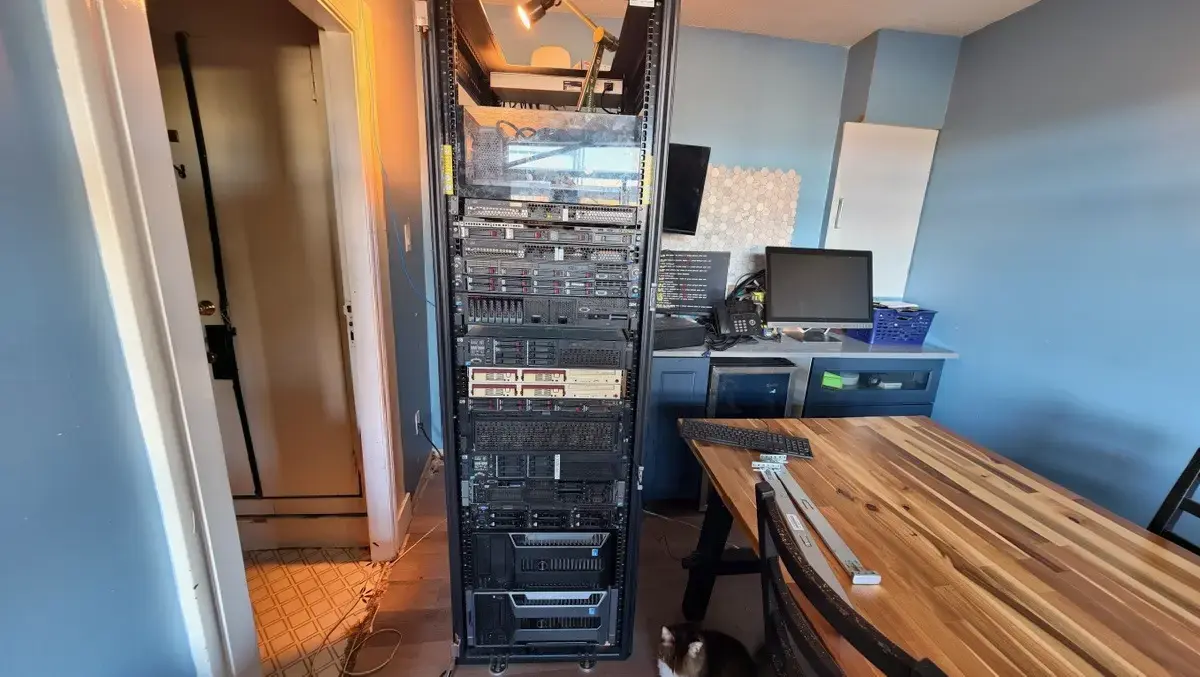

An independent AI research initiative in Ottawa is developing VANTA, an experimental platform for AI-assisted scientific discovery, using existing computing resources that include an older NVIDIA RTX 3060 Ti graphics card.
The project is focused on whether smaller-scale AI systems can support scientific investigation, technological invention and experimental computing without access to large data-centre infrastructure. It is also examining whether software design, smaller models and controlled workflows can offset hardware limits.
The organisation said VANTA is designed as a research system rather than a conventional AI assistant. Its aim is to help formulate hypotheses, investigate technical problems, design experiments, assess results and identify directions for further study.
Hardware limits
A central feature of the project is its use of an RTX 3060 Ti, a consumer graphics processor first introduced in 2020. The card lacks the memory and throughput of newer AI accelerators, making larger models and more demanding workloads harder to run.
Those constraints are part of the experiment, the organisation said. Resource management, model selection and software engineering are all being tested as ways to keep research workloads practical on limited equipment.
The project does not argue that consumer hardware can replace AI supercomputers. Instead, it asks whether useful research systems can still be built without the budgets and infrastructure usually associated with advanced AI development.
One proposed part of VANTA is a framework called the Impossibility Engine. It is intended to investigate ideas that may appear impractical at first and test whether those limits are caused by physical laws, engineering constraints or gaps in current understanding.
The initiative is being developed alongside NORA, a separate locally operated AI project. NORA is focused more on technical assistance and practical uses of AI, while VANTA is directed at experimental research and technological discovery.
Independent model
The Ottawa project also reflects a broader issue in the AI sector, where progress is often linked to expensive chips, specialist servers and large research teams. By contrast, this effort is framed around independent engineering, open-source technologies and incremental experimentation.
That model may resonate in Canada, where smaller developers and research groups often face high barriers to entry in advanced computing.
"We are developing VANTA because we believe artificial intelligence has the potential to become more than a tool for answering questions. Our goal is to investigate whether AI can help us explore difficult scientific and engineering problems, develop hypotheses, design experiments and work toward discoveries that can be independently verified," said Christian Crete, Founder, Crete Technology Group, described the purpose of the work in a statement..
"We are doing this with an older RTX 3060 Ti and the computing resources available to us. We don't have a massive AI data centre, but we do have ideas, technical experience and the determination to investigate them. VANTA is about exploring what might be possible, while recognizing that every meaningful discovery must ultimately be supported by evidence," said Crete.