

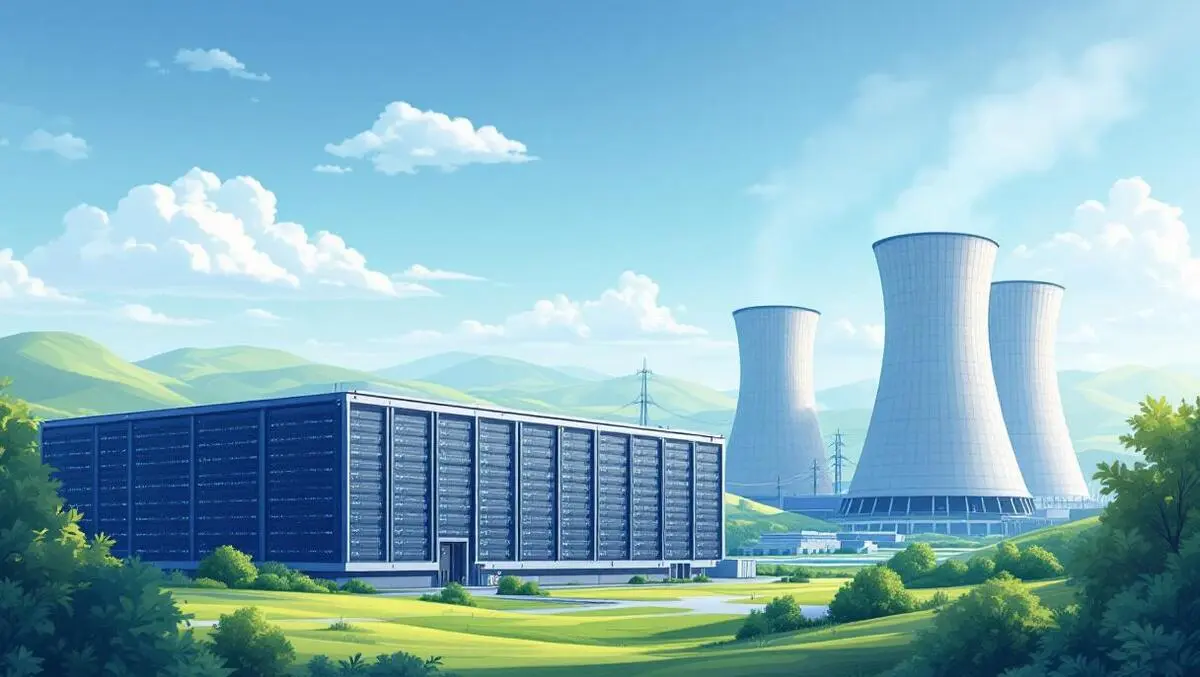

Microsoft's deal to restart a Three Mile Island reactor highlights the soaring energy needs of AI data centres and a nuclear power comeback.
AI surge
The rapid growth of artificial intelligence is driving a rapid expansion of data infrastructure – and with it, a surge in electricity consumption. Tech companies are investing heavily in specialised AI data centres packed with power-hungry processors that draw far more electricity than traditional servers.
As a result, the industry's energy appetite has soared. Data centres now account for an estimated 4% of US power usage, a figure that could more than double by 2030, largely due to AI workloads. In major cloud hubs like Northern Virginia, clusters of server farms already consume over a quarter of the region's electricity supply, straining local grids. Meeting the round-the-clock power needs of AI at this scale has become a strategic challenge, pushing operators to seek new, more reliable energy sources.
Nuclear revival
After decades of decline, nuclear energy is edging back into the conversation as a viable power solution. The partial meltdown at Three Mile Island in 1979 famously halted America's nuclear momentum, ushering in an era of public scepticism and a freeze on new reactor projects. In subsequent years, many ageing reactors were retired early as cheap natural gas undercut nuclear economics. By the 2020s, the US nuclear fleet had dwindled and no new plants had been commissioned in over thirty years – until recently.
Now, electricity demand is climbing to record highs and climate goals are tightening, prompting a rethink. Two long-delayed reactors came online in Georgia in 2023, marking the first new US units in a generation. Federal and state policies have begun offering incentives to keep existing nuclear plants running. And critically, interest from Big Tech – with its need for constant, carbon-free power – is helping to revitalise projects once deemed unviable. If the Three Mile Island reactor returns to service, it would be the first time a fully shut US nuclear plant has ever been reactivated, underscoring a significant shift in the sector's fortunes.
Three mile history
Three Mile Island has long loomed large in America's energy history. In March 1979, a reactor at the Pennsylvania plant suffered a partial core meltdown – the nation's worst nuclear accident – which released radiation and shattered public confidence in nuclear power. While Three Mile Island's undamaged Unit 1 continued operating safely for another 40 years, the incident left a lasting legacy of wariness. Unit 1 was finally shut down in 2019, when its former owner deemed it no longer economically viable amid low electricity prices and stagnant demand. At the time, the closure of Three Mile Island appeared to cap off an era and symbolised the broader downturn of US nuclear energy.
Power deal
It has taken the data centre boom to give Three Mile Island a second act. In September 2024, Microsoft and Constellation Energy agreed to a 20-year power purchase agreement (PPA) that will bring the dormant Unit 1 reactor back online to supply Microsoft's cloud. Under the landmark deal – the largest ever signed by Constellation – Microsoft will purchase a significant portion of the plant's 835 MW output to power its AI data centres in the mid-Atlantic region. This guaranteed demand has provided the economic foundation to justify restarting the reactor. Constellation, the nation's biggest nuclear operator, plans to invest heavily in refurbishing the site, including overhauling turbines, generators and control systems after years offline. The company has even applied for a federal loan of about USD $1.6 billion to support the restart effort. In honour of its new mission, the facility is being renamed the Crane Clean Energy Centre after former Constellation Chief Executive Chris Crane, and is targeting a return to commercial operation by 2028 (with regulators fast-tracking grid connection that could enable a 2027 start).
For Microsoft, the agreement secures a massive source of 24/7 carbon-free electricity to fuel its expanding cloud operations. The tech giant has pledged to be carbon negative by 2030, and running energy-intensive AI services on nuclear power will help it match its data centre consumption with clean energy around the clock. Microsoft described the deal as a milestone in its efforts to decarbonise the grid and meet its sustainability targets.
Pennsylvania's leaders, meanwhile, have welcomed the project as a boon for both the economy and the environment. An independent study estimates that reactivating the plant will generate roughly 3,400 jobs and add USD $16 billion to the state's economy over its lifetime, while injecting over 800 MW of carbon-free power into the region. Governor Josh Shapiro has championed the restart and worked with grid operators to expedite approvals, seeing it as a cornerstone for the state's energy future and a magnet for high-tech investment.
Industry shift
Microsoft's nuclear-powered energy deal is part of a wider shift in how data centre operators source power. After years of relying mainly on wind and solar farms to offset their emissions, hyperscale cloud companies are now turning to nuclear options to guarantee around-the-clock supply for energy-hungry facilities. Amazon Web Services, for instance, signed a 10-year agreement in 2024 to draw hundreds of megawatts from Talen Energy's Susquehanna nuclear plant in Pennsylvania to support a planned 960 MW data centre campus. Google has invested in developing small modular reactors (SMRs) via a partnership with startup Kairos Power, aiming to deploy up to 500 MW of advanced nuclear capacity near its data centres by the early 2030s. Microsoft itself is exploring cutting-edge generation, including a contract to buy power from a future fusion energy project slated for later this decade. And while Meta Platforms' initial plans to build an AI data centre powered by a nuclear plant faced setbacks, the company continues to seek long-term clean energy solutions as it expands.
The embrace of nuclear energy by cloud giants reflects a pragmatic response to the dual pressures of rising demand and sustainability goals. Unlike intermittent renewables, nuclear reactors can deliver steady baseload power day and night, ensuring critical AI systems stay online without carbon emissions. By acting as anchor customers through long-term PPAs, tech firms are providing the financial certainty needed to refurbish ageing reactors and potentially fund new ones – reviving parts of the nuclear supply chain in the process. For the data centre industry, this marks an evolution in energy strategy: securing reliable, emissions-free power at scale has become just as important as network speed or server performance. As artificial intelligence continues to drive digital growth, the revival of Three Mile Island stands as a powerful example of how the quest for more computing power is reigniting interest in an energy source once thought to be on the way out.