

Sijbrandij launches data centre power coalition for AI
Wed, 1st Jul 2026
The Sijbrandij Foundation has launched the Data Centre Power Coalition, starting with 12 founding energy partners focused on supplying AI data centre projects.
The coalition brings together companies across three parts of data centre energy development: on-site power, load flexibility and faster grid interconnection. Its founding members are Amperesand, DG Matrix, Emerald AI, florrent, GridCARE, Hammerhead AI, Hanwha Data Centres, Hitachi, NeuralWatt, Planted Solar, Skeleton Technologies and Voltus.
The launch reflects wider strain on electricity supplies for new AI data centres as developers seek enough power for large computing clusters. Many operators still piece together separate arrangements for generation, interconnection and demand management rather than using a single development framework.
The coalition builds on the foundation's Data Centre Power Playbook, an open framework published earlier this year. It is intended to move from guidance to a coordinated supplier network that infrastructure teams can use when planning new sites.
Under the foundation's model, power planning happens alongside compute planning rather than after a data centre design is largely fixed. The approach combines on-site solar and storage, flexible power demand and efforts to speed grid access.
The organisation argues that execution, rather than economics, has been the main obstacle to wider adoption. Data centre developers often need to assess and contract with multiple specialist providers across different parts of the energy stack.
Aric Li, Director of Data Centre Energy at the Sijbrandij Foundation, said the coalition was created to simplify that process.
"The AI industry runs on procurement, but power is infrastructure - it has to be co-developed, planned alongside compute from the start, not bought piecemeal after the fact," said Aric Li, Director of Data Centre Energy at the Sijbrandij Foundation.
"That complexity, not the economics, is why the commercially superior path hasn't been adopted. We built the Data Centre Power Coalition to remove that complexity - streamlining both energy strategy through our living open-sourced Playbook, and energy execution through our coalition of vetted partners," Li said.
Power bottleneck
The announcement comes as the rapid build-out of AI infrastructure intensifies debate over how quickly power networks can support new data centre demand. In several markets, developers have faced delays tied to grid connection queues, limited transmission capacity and concerns about local system reliability.
Those constraints have pushed operators to look more closely at on-site generation and storage, as well as ways to make large computing loads more responsive to grid conditions. The coalition's structure suggests the foundation sees those elements as complementary rather than separate fixes.
The coalition aims to make power co-development a more standard approach for the AI industry. In practice, that means planning energy supply and computing demand together, with multiple suppliers working within one framework instead of through a series of bilateral arrangements.
Hitachi is among the initial participants and described the coalition as a way to connect specialists across the sector. It highlighted the role of partnership in delivering integrated data centre projects.
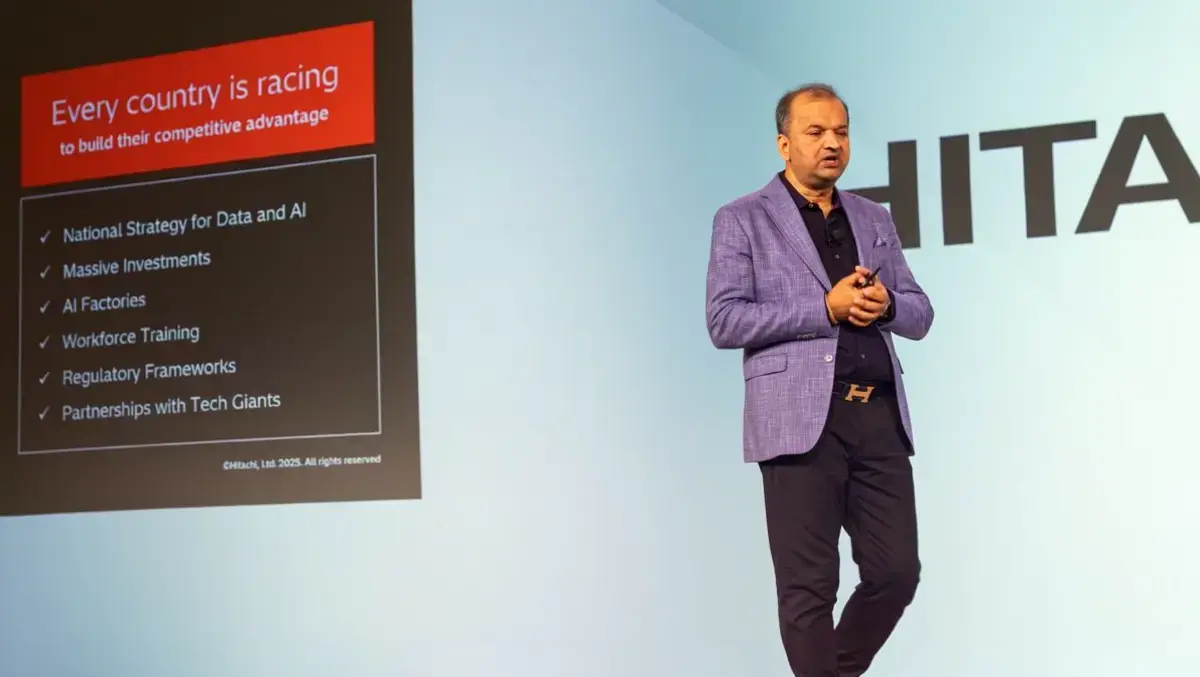
"No single company can solve data center power alone. Hitachi focuses on what we do best as an integrator and partners with best-in-class companies for the rest. That's what makes this coalition compelling - convening partners across the energy ecosystem to deliver reliable, clean power at the speed and scale AI demands," said KJ Joshi, Chief Business Officer & Head of Data Centre Business at Hitachi.
Shared framework
The foundation described the coalition as a vetted network, suggesting member selection is intended to reduce due diligence for data centre developers. Several partners are expected to contribute across more than one area of the framework rather than being limited to a single role.
That may appeal to AI infrastructure teams under pressure to bring computing capacity online quickly, particularly where conventional utility timelines remain uncertain. A coordinated supplier group could also help developers compare options across sites with different local power conditions.
The Sijbrandij Foundation said its broader work includes building and incubating projects internally before spinning successful initiatives out into independent organisations. Its activities span cancer care, AI energy, education, philanthropy and art, and the data centre energy effort is one of its sector-focused initiatives.
In the data centre market, electricity access has become central to expansion plans as demand for AI training and inference grows. The coalition's launch underlines how energy procurement, grid access and site design are increasingly being treated as a single challenge by companies trying to add computing capacity.
The new group enters that discussion with a model built around on-site generation, flexible demand and faster interconnection, backed by 12 initial partners from different parts of the energy and infrastructure supply chain.