


Last month, autonomous vehicle (AV) rideshare company Waymo expressed interest in entering the Canadian market. However, some critics wondered how this tech could carry passengers through some of the harshest winters Torontonians themselves can find hard to navigate.
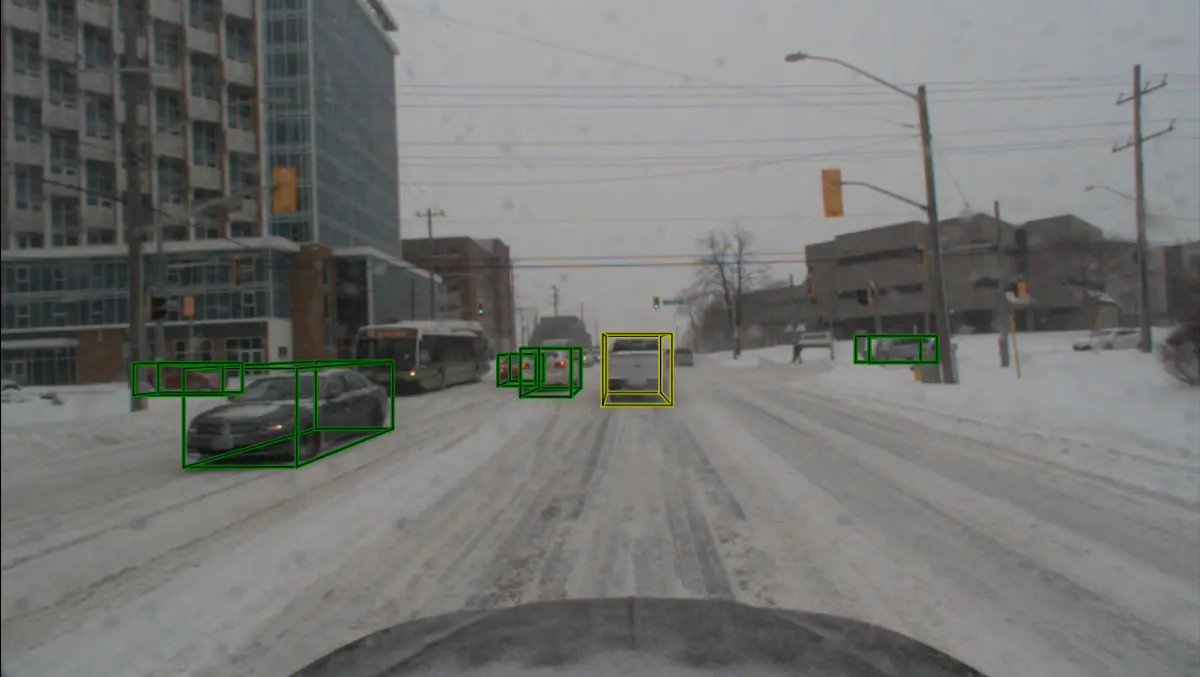
While there are no concrete plans for AVs to hit the streets of Canada's largest city, the University of Toronto has been working on research to test how well AVs can handle flurries and lane-less, snow-covered roads using cameras, radar, and LiDAR technology that continues to develop since the project's launch in 2019.
Steven Waslander, Principal Investigator of the WinTOR project at the University of Toronto, is leading a team of 35 researchers to conduct these studies.
He said that the primary upgrade for winter-ready deployment is data quality. Whether that be adjusting the sensors' ability to identify snow-covered vehicles or training them to follow tire tracks on snow-covered roads when the default would be to look for painted lines. Controls also need to be modified, after all, wheel torque changes dramatically on snowy roads. Predictions and interactions come into play as AVs adjust their driving operations, potentially affecting other drivers on the road.
Waymo will launch services in its first snowy city, Denver, later this year. Waslander said this will act as a precursor to a possible AV arrival in Toronto.
The Mayor's Office confirmed to legacy media organisations in April 2026 that the company had registered for Ontario's Automated Vehicle Pilot Program.
"From what we've seen in Waymo's rollout, it takes about six months to a year. They come to a new city, they've got to drive around to figure out where the potholes are, why the school buses look different, that sort of thing. They've got to find all those little nuances in every new city - winter is probably a more complex nuance but along the same veins," said Waslander.
WinTOR has participated in the Canadian Adverse Driving Conditions dataset, which evaluates perception degradation in snowy conditions, including detection, tracking, and prediction performance.
While much tech is integrated into AV systems, Waslander says LiDAR is crucial to making them winter-capable.
The project partnered with software-defined lidar firm AEye to use its long-range Apollo LiDAR sensor, which Waslander said is capable of operating in more adverse winter conditions.
"LiDAR can be a little bit corrupted, especially if fog is dense or snow is thick. So you have to sort of build around that to modify the perception algorithms, you have to change the way you do your planning, you have to basically be aware of all of the variations that are occurring and handle them the same way you would in good conditions," he added.
AEye's Chairman and CEO Matt Fisch said the next generation of LiDAR is moving from passive, point-of-reference mapping to active, software-defined integrations that can communicate with artificial intelligence.
The company's solid-state lidar technology can be reprogrammed and redeployed across industries without hardware changes. Unlike traditional lidar systems with spinning mechanical components, the device can be moved from a vehicle to a traffic intersection or onto a plane or train with only a software update.
"LiDAR is active, meaning it shines its own light. This is why you can see in the dark ... The fact that we shoot our own laser pulses out allows us to, for example, sneak in between snowflakes. They're not microscopic, but they're very narrow laser puzzles. So if you sort of deliberately do some stuff, you can shoot between snowflakes and see through weather." said Fisch. "Download new software and it works in a different environment, and that allows customers, or whoever's trying to solve a problem with LiDAR to experiment very quickly. They won't have to wait for a hardware change or an update."
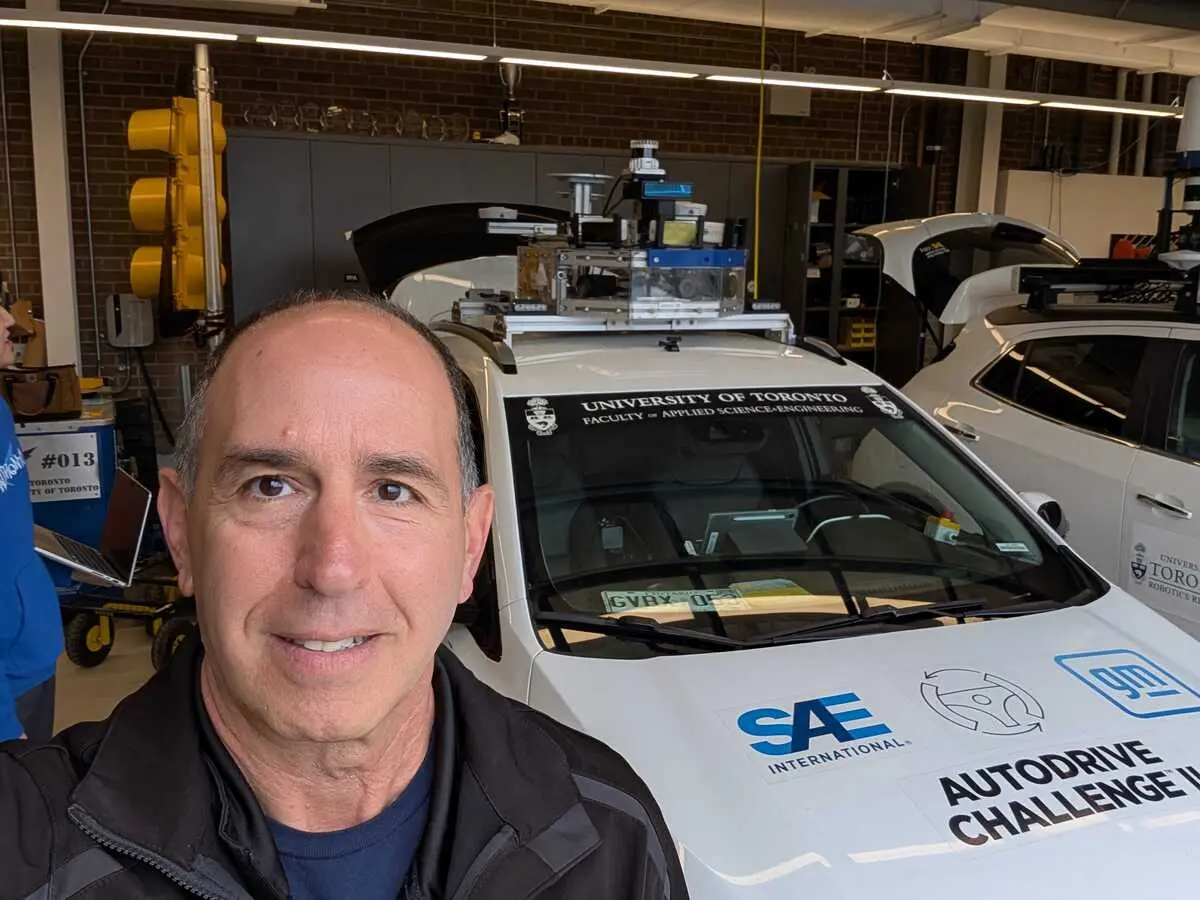
Four other partners contribute to the university's WinTOR program. General Motors, LG Electronics, Applanix and NavTech joined AEye on the university project.
Waslander said a mix of autonomous technology is needed to perform in winter. While radar can see better through precipitation, it does not have the accuracy of LiDAR, which provides very precise three-dimensional points with laser pulses down to the centimetre, millions of times per second. Software-defined tech adds to the equation.
"One of the advantages of software-defined data would be that you could start building in attention into the way you collect information. Like when you're at an intersection ... you don't need to scan in great detail a solid building at the corner, you need to see what all the road traffic is doing, so that you can identify the gap clearly," said Waslander. "You can have faster update rates of the areas of interest while driving, instead of just doing the full scan 10 times a second, as is currently."