

Ontario opens path for commercial underground CO₂ storage
Tue, 3rd Feb 2026
Ontario has opened applications for commercial-scale geologic carbon storage projects, setting out a provincial pathway for companies seeking approval to store carbon dioxide underground.
Ontario framed carbon storage as an option for energy-intensive sectors that face pressure to reduce greenhouse gas emissions. It added that the technology could cut emissions by five to seven million tonnes a year while creating more than 4,000 jobs and reducing costs for industry by nearly CAD $1 billion.
"Carbon storage is a tried and trusted technology in Canada and around the world and Ontario is ready to take a safe and responsible approach to unlocking this new opportunity for workers and businesses," said Mike Harris, Minister of Natural Resources, Ontario. "Our government is moving forward with strong environmental protections and clear rules that protect our environment while also protecting our economic advantage, supporting good-paying jobs and ensuring Ontario remains competitive around the world."
Ontario said it has developed a regulatory framework for geologic carbon storage projects following consultations and engagement since 2022. The province cited three discussion papers, seven public consultations on the Environmental Registry of Ontario and 11 stakeholder engagement sessions.
Ontario's announcement follows the passage of the Geologic Carbon Storage Act, 2025.
"The passing of Ontario's Geologic Carbon Storage Act is a major milestone in building a cleaner, stronger economy," said Dawn Gallagher Murphy, Parliamentary Assistant to the Minister of Natural Resources, Ontario. "By regulating carbon storage, we are taking the necessary steps to help ensure its safe implementation while also attracting new investments, creating good-paying jobs and positioning Ontario as a leader in the transition to a global low-carbon economy."
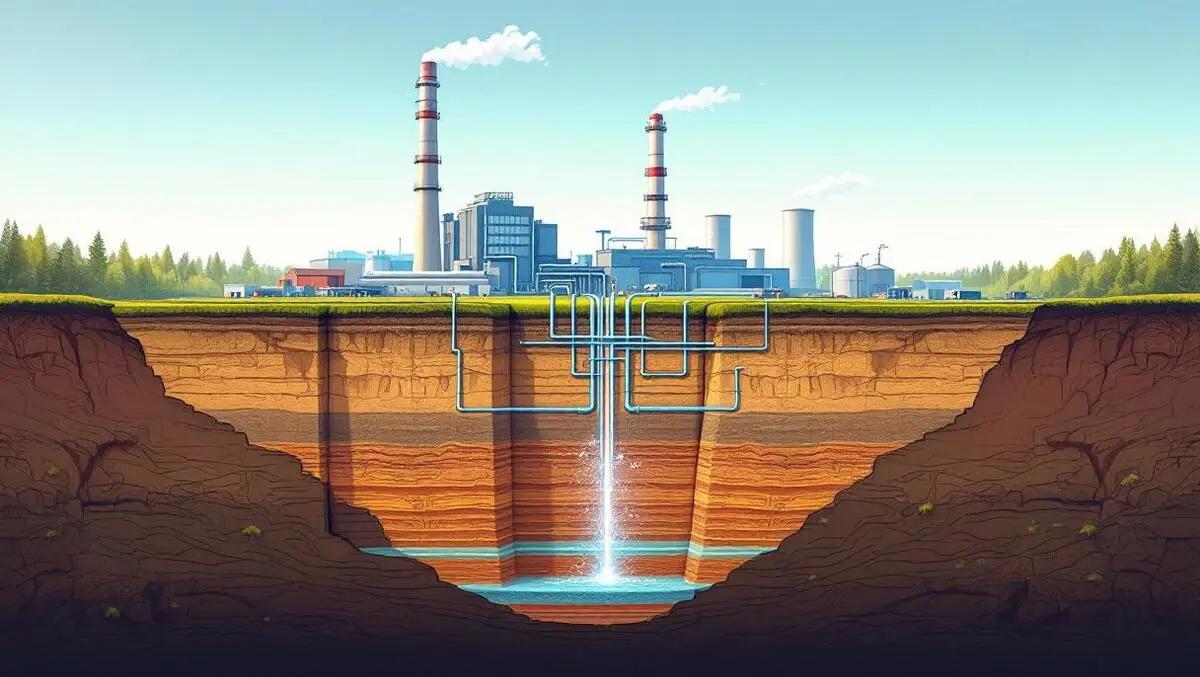
Commercial-scale geologic carbon storage involves injecting captured carbon dioxide into deep underground rock formations for permanent storage, Ontario said.
Most of Ontario's potential for geologic carbon storage is expected to be in Southwestern Ontario (an area that also includes many of the province's largest point source emitters of carbon dioxide).
The focus on Southwestern Ontario links carbon storage to sectors with large, concentrated emissions, such as heavy industry. The province did not name specific industries or companies that intend to apply for approvals.
According to the Global Carbon Capture and Storage Institute, there are nearly 400 carbon capture and storage projects at various stages of development worldwide in 2023. Additionally, close to 300 million tonnes of carbon dioxide have been injected underground to date.
The province did not set out in detail how it will assess proposed projects, beyond noting clear rules and environmental protections. It also did not state how many projects it expects to approve in the first round of applications.
The opening of the application process creates a formal entry point for developers planning to combine carbon capture at industrial sites with transport and permanent underground storage.